Are you struggling to learn a particular song? Or perhaps an entire collection of tunes? You don't necessarily have to feel frustrated to benefit from this advice – it works just as well for refining something you already know, or for speeding up a song you're writing yourself.
Here are my best tools for seeing (and hearing) a song anew.
1. Don't get stuck in one key
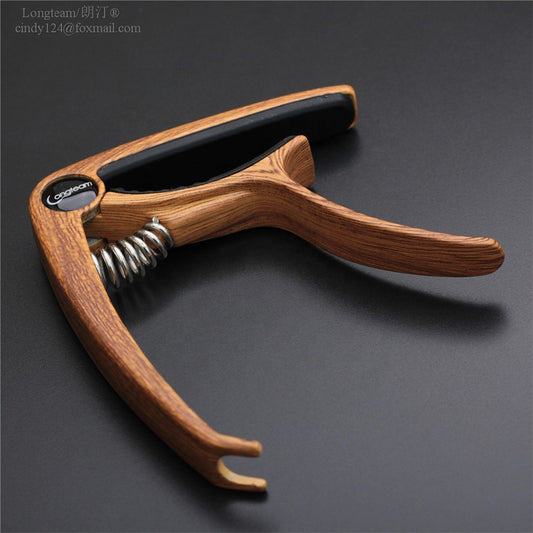
Many of us stay in the key we first learned the song in. But by changing keys, you can unlock entirely new possibilities. Today, it's easy – use a capo or an app that transposes for you with a keystroke.
For example, try moving a song from C major to G major. Suddenly, you have to use different fingers and chords, and the instrument sounds in a way you're not used to. Perhaps you discover that your voice finds new nuances when you have to search both up and down your range? Even if you end up in C major in the end, the journey has given you ideas you never would have had otherwise.
2. Change instruments (even if you're "rusty")
Do you usually play guitar? Try playing the song on a piano, even if you feel like a beginner on the keys. Feel free to combine this with changing keys.
What we are doing now is breaking patterns and habits. This is especially effective when writing your own songs. Different instruments have different attacks, timbres, and souls, and this often elicits completely different melodies. Being able to accompany yourself on both a string instrument and a keyboard gives you an enormous musical foundation.
3. Learn the song through different roles
For a period, I played in a folk music group. There, I switched instruments from week to week; one week I played bass, the next it was ukulele or guitar. We didn't play from sheet music or chords, but learned everything by listening – as is often the case in folk music.
Learning a song on bass first, without thinking about what chords they were, and then having to play it on the ukulele the following week, was incredibly challenging. I often describe it as experiencing how the nerve signals went between the ear, hands, brain, and spinal cord like on a rollercoaster. But eventually, I trained a kind of "double muscle memory." You learn the song's architecture instead of just looking at your fingers.
4. Experiment with tempo
Try to drastically change the tempo, with or without changing instruments. Some songs completely change character when played slower or faster. What felt like a staid ballad can suddenly get a whole new spark if the tempo is sped up – or vice versa. An "aha" moment is often hidden in a new tempo.
5. Loop short sections
Instead of playing the entire song from start to finish, try "looping" a short sequence. For example, sing the first line over and over in a continuous circle. You might need to add a measure or an extra chord to make it flow, but the effect is significant.
This is not only a good tool for practicing difficult parts. By repeating a phrase 10-12 times, you force your brain out of autopilot. You begin to hear the nuances in the text, the timbre of the voice, and small details in the playing that you usually just rush past.
My advice: The next time a song feels a bit "stiff" or boring, don't force yourself through it the same way as before. Break it up, change keys, or find another instrument. It is in the small deviations that the biggest "aha" moments lie.