
Tuners have existed as long as there has been modern technology. The first generations were large and barely portable. They were usually designed like suitcases, often with some kind of carrying strap, and the control panel/display could almost be mistaken for the control panel of a nuclear power plant. You connected the instrument to it via an instrument cable, or you used the built-in microphone, if there was one. To tune an acoustic instrument, you had to be in a room with as little ambient noise as possible.
Technology and electronics thankfully shrank. By the 80s and 90s, they had become small enough to fit in a normal instrument case. A built-in microphone became standard.
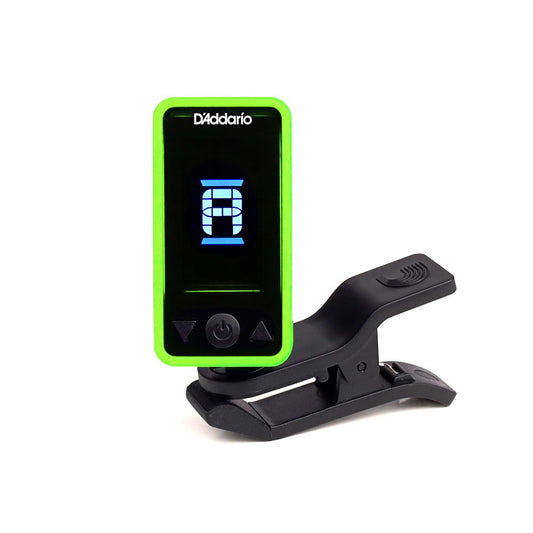
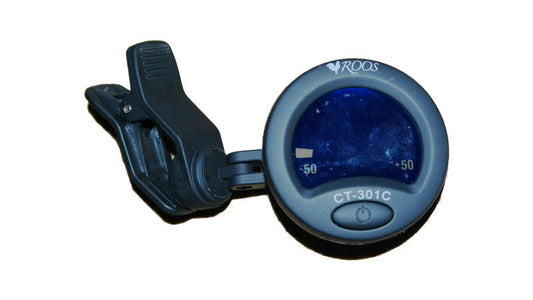
In the early 2000s, clip-on tuners became so reliable and affordable that ordinary consumers gained access to them. Tuners without a traditional microphone, which instead pick up vibrations from the instrument head, for example. I remember the first time I got to try one, and suddenly it didn't need to be completely silent around me for me to be able to tune – Fantastic feeling!
For many years, clip-on tuners were very common among acoustic musicians. These tuners also got increasingly elaborate screens and new features. There also appeared tuners that could tune several notes simultaneously and/or analyze entire chords. But they were expensive.
Today, in 2024, there is a tuner that is slowly but surely becoming more common, and that is the tuner in the form of an app. For many, it's a kind of compromise. Now you again have to sit in a relatively quiet room. But in return, it's one less thing to keep track of and get batteries for. You always have your phone with you.
The best tuner is not the one with the most features and the fanciest screen – but the one you are guaranteed to have with you.